
Our Latest Blogs




The NiceDay Dispatch
Guides & Reports
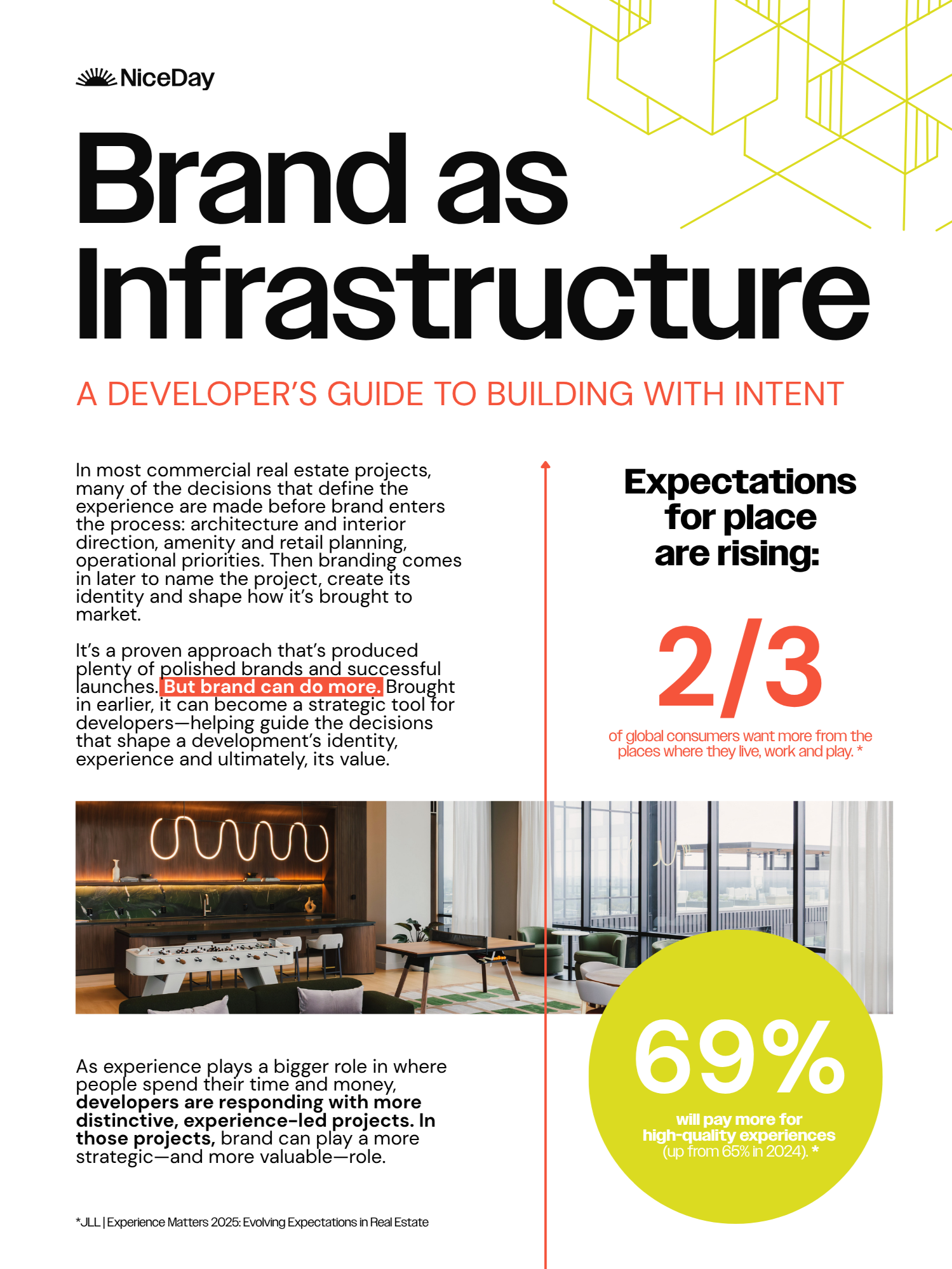
Brand as Infrastructure
A Developer’s Guide to Building With Intent
The longer you wait to define your development's brand strategy, the fewer opportunities you have to shape what makes it stand out. Here's why timing matters—and what developers should be thinking about earlier in the process.
Social media trends can be a quick way to earn attention, but what matters more is understanding the larger shifts those trends point to—and what’s driving those shifts in the first place.
When CRE developers hear “branding,” they often picture the visible pieces: the name, logo, color palette, signage, website and leasing materials. But for hotels and apartment communities, a strong brand can do so much more.
Does your target audience reflect your audience or your customers? The difference between may seem subtle, but it’s one of the most important strategic distinctions a brand can make.
Most people will tell you they make decisions based on logic: Compare features, weigh options, read reviews, choose rationally. But watch how people actually behave and a different story shows up
In hospitality, your reputation is your currency. A packed dining room, a fully-booked hotel, a reservation waitlist—none of it happens without strong word of mouth. And in today’s review-driven, social-first world, that word of mouth often starts with PR (or, public relations).
Walkable streets. Open-air patios. A mix of local shops, restaurants and creative spaces. What used to be the domain of urban planners has made its way into the world of branding and commercial development.
When we talk to clients about brand strategy, one of the first things we dive into is the audience. Who are you trying to reach? Who is this brand for?